Domestic Violence
What to Do If Your Husband or Wife Is Arrested for Domestic Violence in San Jose
FREE Confidential Consultation • Available 24/7

Last Updated
October 9, 2026
General Topics

If you're arrested for the same offense in Redwood City and in Oakland, you are not, in any meaningful sense, facing “California justice.” You're facing San Mateo County's justice, or Alameda County's — two systems that sit twenty miles apart and can produce very different outcomes for very similar cases.
Two illustrative examples make this concrete. A 35-year-old accused of embezzling $300,000 from an employer might resolve with a 3-year sentence in one Bay Area county and a 10-year sentence in another. A 40-year-old first-time DUI defendant might resolve a plea bargain with 2 days in county jail in one county, and 12 days in another. These are illustrative ranges, not documented case outcomes — but attorneys who've tried cases across the region for decades will tell you the underlying pattern is real: the county matters as much as the facts sometimes do.
After looking at the numbers and talking with attorneys who've tried cases across the region for decades, we wanted to lay out what actually seems to drive that gap — and, just as importantly, what doesn't.
The first instinct is to look for the obvious culprits: is one county just poorer, better-funded, or more crime-ridden than another? We pulled county-level data to check.
| County | Median Household Income | DA Office Budget | Public Defense Budget | Reg. Democratic Share | Crime Rate /100k |
|---|---|---|---|---|---|
| Marin | $63,110 | $18.0M | $8.1M | 56% | 213.4 |
| Contra Costa | $50,667 | $41.8M | $25.9M | 50% | 414.1 |
| San Francisco | $56,722 | $57.8M | $34.2M | 58% | 780.5 |
| Alameda | $50,031 | $72.8M | $39.1M | 57% | 753.4 |
| San Mateo | $59,192 | $39.4M | $17.5M* | 51% | 270.5 |
| Santa Clara | $57,281 | $140.0M | $64.5M | 47% | 281.8 |
| Napa | $44,878 | $11.6M | $5.0M | 46% | 392.9 |
| Solano | $42,983 | $25.3M | $13.0M | 47% | 492.9 |
*San Mateo County uniquely funds a Private Defender Program, run through the county bar association, rather than a traditional public defender's office.
Figures reflect published county budget and Census/DOJ data from roughly 2016–2018, shown as a historical baseline to illustrate the pattern, not a current-year budget claim.
None of these numbers sort cleanly by sentencing severity. Every one of these eight counties registers as majority-Democratic, within a fairly tight 46–58% band. Budget doesn't sort it either — Santa Clara's DA office runs on more than three and a half times San Mateo's budget, yet San Mateo is the stricter county of the two, not the more lenient one. Raw crime rate doesn't sort it: San Francisco's crime rate is roughly triple Marin's, yet that gap doesn't translate into a predictable relationship with how harshly either county actually sentences.
This isn't a new observation for this office. An older comparison we ran turned up the same pattern using a different pair of counties: Contra Costa, with an estimated population of 1,138,645, imprisoned 404 individuals out of 1,090 arrests; Marin, with a population of 261,532 — less than a quarter the size — imprisoned 512 individuals out of just 682 arrests. The much smaller county sent more people to prison from fewer arrests. Similarly, Alameda reported 4,266 crimes in one comparison year and incarcerated 568 people; Santa Clara reported roughly half as many crimes, 2,498, and incarcerated more people, 817. County size, arrest volume, and raw crime counts simply don't predict sentencing outcomes.
If none of the usual variables explain it, something else is doing the work.
Some of this is structural, and it's worth naming plainly: California has no statewide sentencing guidelines the way the federal system does, and all 58 counties are free to develop their own charging norms, plea policies, and courtroom cultures within the bounds of state law. That's the mechanism that makes county-level variation possible in the first place.
But a mechanism isn't a cause. Judicial discretion and the absence of uniform guidelines explain how two counties can end up in different places — they don't explain why a given county lands where it does, or why that can change within a few years in one county and stay fixed for decades in another. For that, the more useful question isn't “what kind of person is the judge,” it's “who is the District Attorney, and what got them elected” — because the DA's office, far more than any individual judge's temperament, sets the charging decisions, plea offers, and diversion policies that determine most outcomes long before a case reaches sentencing.
Most discussions of sentencing disparity focus on prosecutors and judges. But the structure of a county's public defense system shapes outcomes too, and here San Mateo County is an outlier.
Since 1968, San Mateo County has contracted with the San Mateo County Bar Association to provide indigent defense through its Private Defender Program, rather than operating a county public defender's office. It is the only county in California with a population over 500,000 without a public defender's office. Appointed cases go to a panel of private attorneys, many of them highly experienced, each handling cases from an individual practice.
That structure matters for a reason that rarely makes the news: leverage. In San Francisco and Alameda counties, a single institutional public defender's office represents a large share of everyone charged. When that office decides as a matter of strategy to stop routinely waiving time, insisting on the statutory speedy-trial deadlines and setting large numbers of cases for trial, it can bottleneck the court calendar. Prosecutors facing more trials than they can try have a strong incentive to make better offers and dismiss weaker cases.
In our attorneys' experience, a panel of independent private practitioners cannot apply that kind of coordinated pressure on the San Mateo County DA's office. This is not a criticism of the individual Private Defender attorneys. The limitation is structural: there is no single office that can decide, as an institution, to push the calendar to its limit. That is one more reason the same charge can resolve differently in Redwood City than in Oakland or San Francisco.
In researching this piece, we talked with attorneys who've spent their careers on the defense side of Bay Area courtrooms. Their read on the problem differed, which is itself revealing.
Jim Riley, who has practiced criminal defense in the region for 45 years, points to something closer to a rural-versus-urban court culture: smaller, less transient counties tend to develop more conservative, “we know our defendants” sentencing norms, while the busier urban courts have historically absorbed higher caseloads with more standardized, negotiated outcomes.
Tennille Duffy's read centers on race — that who a defendant is still shapes how a case is charged and resolved, court to court and sometimes courtroom to courtroom. Riley doesn't disagree that race plays a role in individual outcomes. But he makes a sharper point about the county-to-county question specifically: hold race constant, and the gap doesn't close. Two defendants who are demographically identical — same race, same sex, same charge, same criminal history — can walk into different Bay Area courthouses and walk out with sentences that aren't close. In Riley's experience, the same fact pattern for a white male defendant has landed, depending on the county, anywhere from roughly a year to five years.
That distinction matters. Race helps explain disparities within a courthouse — who gets the harsher offer at the same table. It doesn't explain why the table itself is set so differently thirty miles down the highway.
Here is the conclusion this research keeps pointing back to: certain very active, highly engaged members of a county's population are the ones who show up for District Attorney elections — and they are, in a very direct sense, the ones actually electing the county's DA, and by extension, setting that county's charging and sentencing culture.
“Democratic” or “progressive” is not one electorate with one shared platform. It's eight distinct county electorates, each with its own most-engaged, most-organized, most-likely-to-turn-out-for-a-down-ballot-race voters — and what that specific slice cares about most is not the same from county to county, even when the overall registration numbers look nearly identical. DA races are exactly the kind of contest where this matters most: turnout for county-level, off-cycle, or primary elections runs well below top-of-ticket general-election turnout, so a relatively small, well-organized, highly motivated bloc of voters can decide the outcome — while the county's broader political identity, the number most people would point to, ends up telling you almost nothing about who wins.
San Mateo and Alameda make the point cleanly. Both are majority-Democratic by a similar margin. Neither is “more liberal” than the other in any meaningful sense — they're differently liberal.
San Mateo is a Peninsula county defined geographically by miles of bay- and coast-adjacent land, where sea-level rise and coastal resilience are not abstract talking points but funded county planning priorities. Call these climate-change liberals: the slice of San Mateo's electorate that shows up, organizes, and donates most consistently is oriented around environmental and coastal-resilience issues, not criminal justice — which is a large part of why the county's DA's office has run for years on continuity and a traditional prosecutorial posture, largely unchallenged.
Alameda's civic life, and Oakland's in particular, has been shaped for two generations by a different animating issue: policing and criminal justice. Call these police-brutality liberals: it's the county that produced the Black Panther Party and has hosted some of the state's most sustained police-accountability organizing — the same organizing that elected a reform-minded DA in 2022, and just as decisively recalled her two years later. In Alameda, criminal justice is the issue the most energized slice of the electorate organizes, donates, and shows up around, so the DA's office has swung hard, more than once, in a short period of time.
Neither county is more or less progressive than the other. They simply care most about different things, and a county's DA is elected by whichever slice of the electorate cares most about that particular office.
Alameda's recent history is the clearest real-world test of this idea, because it's played out in real time, twice. Voters recalled DA Pamela Price in November 2024. The Alameda County Board of Supervisors appointed Ursula Jones Dickson to fill the seat in January 2025. In December 2025, Price announced she would run to reclaim the office in 2026 — a direct rematch, on the ballot, of the same question voters had just settled by recall.
That rematch happened in the June 2, 2026 primary, and it wasn't close. Jones Dickson won outright with roughly 66% of the vote, clearing the 50% threshold needed to win the seat in the primary and avoid a November runoff entirely. Price's comeback bid drew about 23%; a third candidate, civil rights attorney Gopal Krishan, drew about 10%. Reporting on the race also noted Jones Dickson's campaign fundraising outpaced both Price's and Krishan's.
This is worth pausing on, because it's not just supporting evidence for the thesis above — it's a live demonstration of it. The same organized, sustained, criminal-justice-focused engagement that recalled Price in 2024 did not fade or waver by 2026; it showed up again and delivered a landslide against her return, in a low-turnout June primary of exactly the kind where a motivated, engaged bloc has outsized influence. Alameda's DA politics haven't stabilized because the county changed its mind about what it wants from the office — they moved decisively, twice, because the same engaged slice of the electorate keeps showing up specifically for this race and knows precisely what it wants.
This pattern isn't only visible in who becomes DA or how a case gets charged. We pulled the official bail schedules for every county Summit Defense serves, and the same unevenness shows up there — not as one county being uniformly “tougher” or “softer” than another, but as specific categories of crime standing out in specific counties, which is exactly what you'd expect if bail schedules, like DA elections, are shaped by whichever issue a county's most organized voters have pushed hardest on.
Alameda County's bail schedule sets felony domestic violence at $50,000 — double the $25,000 figure in Santa Clara, San Mateo, Marin, and Napa. Of every line item compared across nine counties, that's the widest gap on an offense this common. It fits the pattern above: a county whose organized, sustained advocacy has reshaped who holds its DA's office more than once in a short period is also a county whose court system has set an unusually high floor specifically for domestic violence.
San Francisco shows a related but distinct pattern around violent crime more broadly. Assault with a deadly weapon is bonded at $75,000 there — three times Santa Clara's $25,000 — and forcible oral copulation at $200,000, double the figure in most neighboring counties. That tracks with San Francisco's own recent political history: the 2022 recall of DA Chesa Boudin was driven substantially by public alarm over street-level violent crime and disorder specifically.
Theft is a useful check on this idea rather than just more evidence for it, because the county that stands out isn't the one you'd guess. It's Solano, where grand theft carries a scheduled $25,000 — the highest theft figure of the nine counties surveyed. Santa Clara's grand theft bail, by contrast, is $10,000, tied for the lowest in the comparison alongside San Mateo and Marin. Santa Clara's bail schedule sits at or below the regional median in nearly every category reviewed — violent crime and property crime alike — which tracks with, rather than complicates, the earlier point about Jeffrey Rosen's consistent, nationally recognized reform-oriented tenure since 2011.
| County | Current District Attorney | Notable Context |
|---|---|---|
| Marin | Lori Frugoli | In office since 2018 |
| Contra Costa | Diana Becton | Currently facing an active recall signature campaign |
| San Francisco | Brooke Jenkins | Took office in 2022 after the Boudin recall; elected to a full term in 2024 |
| Alameda | Ursula Jones Dickson | Appointed Jan. 2025 after Pamela Price's recall; won a full term outright in the June 2026 primary (~66%), defeating Price's comeback bid (~23%) and a third candidate (~10%) without a runoff |
| San Mateo | Stephen Wagstaffe | Long-tenured; among the most experienced sitting DAs in the region |
| Santa Clara | Jeffrey Rosen | In office since 2011 |
| Napa | Allison Haley | Incumbent |
| Solano | Krishna Abrams | Incumbent |
Alameda is now the clearest example on the board: two decisive electoral swings on the same criminal-justice question inside about eighteen months. That volatility is the point — a county's sentencing culture is far less fixed than its demographics or its politics, and it can turn over inside a single election, whenever the slice of the electorate that cares most decides it's time to organize, or to reaffirm.
None of this is academic if you or someone you love has actually been arrested. It means the county where you're charged is not a minor detail — in a real sense, it can matter as much as the facts of the case itself. It means the same conduct can carry meaningfully different exposure in Oakland than in Redwood City, or in San Rafael than in San Jose. And it means that defense counsel who understands the specific charging patterns, plea culture, and current leadership of the county you're actually in — not a generic statewide playbook — is doing something that measurably affects outcomes.
That's the reasoning behind Summit Defense maintaining offices across the Bay Area rather than a single location: sentencing here isn't one system, it's eight of them, and knowing the difference, county election by county election, is part of the job.
This analysis draws on published county budget documents, U.S. Census and California DOJ data (baseline figures, circa 2016–2018), current county district attorney offices' own public records, 2026 primary election results reported by CBS News San Francisco and Oaklandside, and the professional observations of Summit Defense attorneys and colleagues in the local defense bar.
About The Author
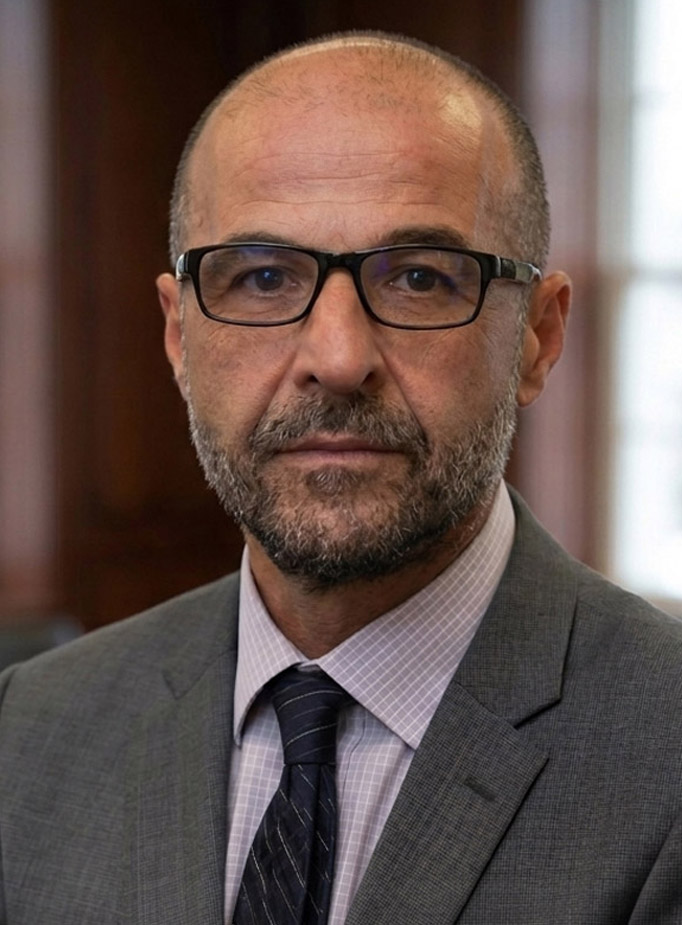
Rabin Nabizadeh
Attorney at Law
Rabin Nabizadeh is a dedicated criminal defense attorney with extensive experience in both Federal and State courts around the Bay Area. He has successfully represented clients in cases ranging from Misdemeanor DUI and Theft to serious felonies such as Grand Theft, Burglary, Sex Crimes, and Murder. Notably, Mr. Nabizadeh possesses a unique understanding of Immigration Law, allowing him to adeptly navigate cases with both criminal and immigration consequences. Fluent in Hebrew and Farsi, he also enjoys playing classical guitar in his spare time.

If you have been accused of a crime in the Bay Area, you need experienced legal counsel to protect your rights, reputation, and future. Summit Defense Criminal Lawyers understands how overwhelming a criminal charge can be. Whether you are facing allegations involving violent crimes, sex offenses, domestic violence, DUI, or other serious charges, the consequences can be severe—including jail time, heavy fines, and a permanent criminal record. With offices throughout the Bay Area, including San Francisco, Oakland, and San Jose, our attorneys provide strategic, aggressive defense to clients across Northern California. Contact us today to discuss your case and learn how we can help protect your future.
Call Now (866) 847-7613Ready to protect your rights? Contact Summit Defense now for a free consultation.