Criminal Process
How Much Is Bail, Really? A County-by-County Bail Schedule Comparison Across the Bay Area
FREE Confidential Consultation • Available 24/7

Last Updated
October 6, 2026
Domestic Violence

If your husband or wife was just arrested for domestic violence in San Jose, the most important fact is this: police make the arrest, but the District Attorney decides whether to file charges. The days between the arrest and that decision are when a San Jose domestic violence lawyer can make the biggest difference.
In Santa Clara County, a dedicated Domestic Violence Unit inside the District Attorney's Family Violence Division handles these cases. In its own words, the unit "reviews all such cases and determines what charges will be filed," for misdemeanors and felonies alike (Santa Clara County DA).
Its stated philosophy is that domestic violence is "a crime against society (not a private family matter)." In practice, that means:
Couples are often surprised by this: a defense lawyer's job is to look at what the prosecution can prove, not to settle what really happened. Our system puts the burden on the prosecution to prove every element beyond a reasonable doubt, using evidence the court will allow.
So we ask different questions than you might expect:
The DA weighs the same things before filing. If the admissible evidence is thin, the case may never be filed.
Hearsay is an out-of-court statement offered to prove that what it says is true. California's rule is simple: hearsay is not admissible "except as provided by law" (Evid. Code § 1200). The fight is usually over the exceptions.
Most judges will admit the 911 call under the spontaneous statement exception, which most of the country calls the "excited utterance" rule. Under Evid. Code § 1240, a statement is admissible if it describes an event the speaker perceived and was made "spontaneously while the declarant was under the stress of excitement" caused by that event. A frightened caller describing what just happened is the textbook example.
The U.S. Constitution doesn't usually block it either. In Davis v. Washington (2006), the Supreme Court held that statements to police are "nontestimonial" when the primary purpose is "to meet an ongoing emergency." The 911 call in that case was admitted even though the caller never testified.
Outside exceptions like the 911 call, the alleged victim's account generally has to come from the witness stand, where the defense can cross-examine. A written statement or an officer's retelling of an interview usually can't replace testimony.
Anything the accused says can be used against them. Under Evid. Code § 1220, a party's own statement offered against that party is not barred by the hearsay rule. That covers "I'm sorry," "I just pushed her," text messages, and recorded jail calls. The safest statement is no statement: be polite, ask for a lawyer, and say nothing about the incident.
The alleged victim has no say over whether charges are filed. That decision belongs to the DA. Telling the DA "I don't want to prosecute," or changing the story, often works against the accused:
The better route is for the defense lawyer to deal with the DA directly, using evidence and the law, without putting the alleged victim in the middle.
A subpoena is a court order to come to court. If you are the alleged victim and you are served with one, here is what California law says.
Every case is different, and no lawyer can promise an outcome. These are the main paths:
If someone is convicted of a domestic violence crime and granted probation, California law sets minimum terms: at least 36 months of probation, a protective order, and a batterer's program lasting not less than one year of weekly sessions (Penal Code § 1203.097). A 16-week program completed voluntarily is a very different commitment from a year-long court-ordered one.
If the case is charged, the court will issue a criminal protective order. In Santa Clara County, the court generally keeps a full stay-away order in place unless the protected person completes a 6-hour victim awareness class. This step is unique to Santa Clara County. Until the order is changed, it must be obeyed exactly, even if both spouses want to reunite.
No. In Santa Clara County, the DA's Domestic Violence Unit decides whether to file. Saying "I don't want to press charges" can even be used against the accused, as explained above.
Often, yes. Most judges admit 911 calls as spontaneous statements, and the Supreme Court has held that calls made during an ongoing emergency aren't barred by the right to confront witnesses. Other statements are easier to challenge.
Sometimes. When we get involved before the filing decision, we may be able to show the DA that the admissible evidence won't support a charge, or negotiate a resolution such as voluntary counseling.
No, not for refusing to testify about the domestic violence itself (Code Civ. Proc. § 1219(b)). But a subpoenaed witness must still appear in court, and other contempt consequences, such as a fine, may still apply.
Right away, before the DA's filing decision.
Summit Defense represents people in domestic violence cases at our San Jose office and throughout Santa Clara County. Consultations are free and confidential. Call us 24/7 or contact us online.
This article is general information, not legal advice. Every case is different, and past results do not guarantee a similar outcome. Reading this article does not create an attorney-client relationship.
About The Author
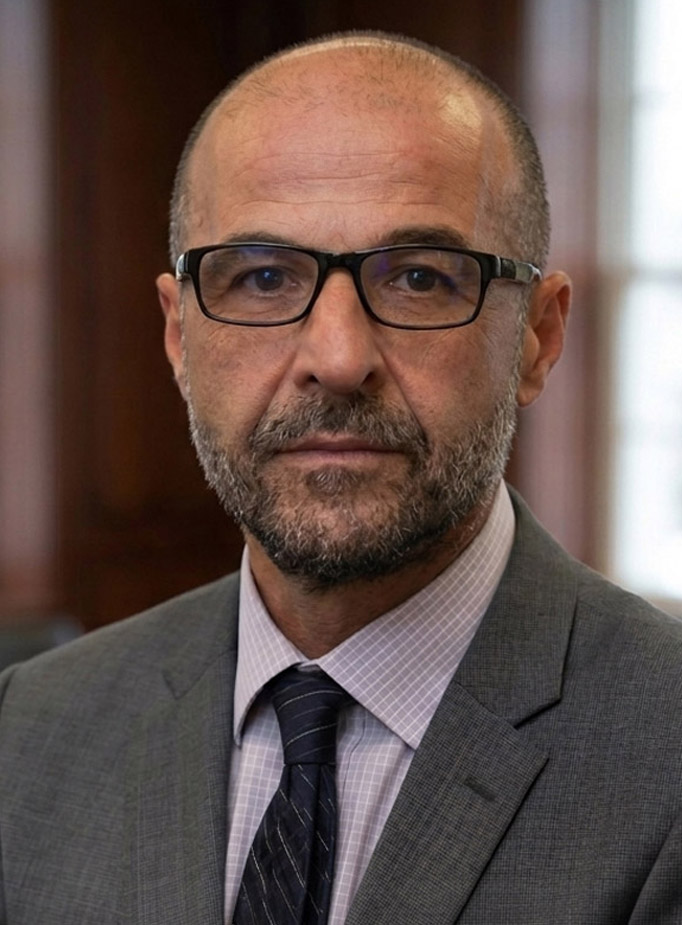
Rabin Nabizadeh
Attorney at Law
Rabin Nabizadeh is a dedicated criminal defense attorney with extensive experience in both Federal and State courts around the Bay Area. He has successfully represented clients in cases ranging from Misdemeanor DUI and Theft to serious felonies such as Grand Theft, Burglary, Sex Crimes, and Murder. Notably, Mr. Nabizadeh possesses a unique understanding of Immigration Law, allowing him to adeptly navigate cases with both criminal and immigration consequences. Fluent in Hebrew and Farsi, he also enjoys playing classical guitar in his spare time.

If you have been accused of a crime in the Bay Area, you need experienced legal counsel to protect your rights, reputation, and future. Summit Defense Criminal Lawyers understands how overwhelming a criminal charge can be. Whether you are facing allegations involving violent crimes, sex offenses, domestic violence, DUI, or other serious charges, the consequences can be severe—including jail time, heavy fines, and a permanent criminal record. With offices throughout the Bay Area, including San Francisco, Oakland, and San Jose, our attorneys provide strategic, aggressive defense to clients across Northern California. Contact us today to discuss your case and learn how we can help protect your future.
Call Now (866) 847-7613Ready to protect your rights? Contact Summit Defense now for a free consultation.